

Nutrition
We often tell teenagers to make healthier food choices, but how much control do they really have over what they eat? From social media influences to financial pressures, adolescent nutrition involves far more than simply knowing what is healthy. This reflection explores the challenges young people face and how schools can better support their nutritional wellbeing.
Adolescent nutrition is a health and wellbeing priority that I believe requires greater attention within schools. Adolescence involves significant physical development and increasing independence, making adequate nutrition important for growth and long-term health. However, Australian dietary data highlight a concerning gap between recommendations and eating behaviours. The Australian Bureau of Statistics (ABS, 2023) reported that only 2.8% of young people aged 12–17 met both fruit and vegetable recommendations in 2022. This reinforces my concern that young people are not consistently receiving the nutritional support they need. Nevertheless, I believe improving adolescent nutrition requires more than simply telling students what they should eat.
One challenge is that eating behaviours develop within complex social environments. Ragelienė and Grønhøj (2020) identified peer and sibling influences on young people's dietary behaviours, while Shaw et al. (2023) demonstrated how adolescents' food choices reflect interactions between social relationships and food environments. These findings challenge the assumption that nutritional knowledge automatically produces healthier behaviours. For example, students may understand the benefits of balanced eating but prioritise convenience, affordability or social acceptance when purchasing food. Reflecting on this research has strengthened my belief that educators must understand the circumstances surrounding dietary decisions rather than interpret unhealthy eating as a lack of motivation.
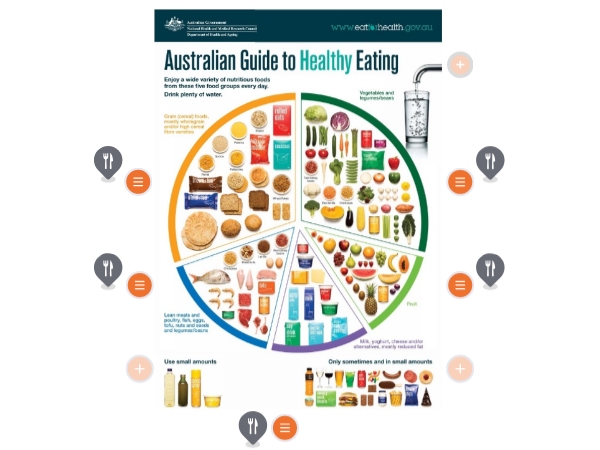
Socioeconomic circumstances further complicate this issue. The Australian Institute of Health and Welfare (AIHW, 2021) recognises that income, culture and environmental conditions influence dietary behaviours. Although the Australian Dietary Guidelines establish evidence-based recommendations for healthy eating (National Health and Medical Research Council [NHMRC], 2013), following these recommendations may be more challenging for families experiencing financial disadvantage. I find this particularly important from an educational perspective because nutrition lessons can unintentionally create judgement when students have limited control over household food choices. Therefore, health education should acknowledge structural barriers rather than place responsibility entirely on adolescents.
Digital influences introduce another concern. Fortunato et al. (2026) identified associations between adolescent social media engagement, body-image concerns and disordered eating. While these findings do not establish causation, they demonstrate why nutrition messages should be considered alongside appearance-related pressures. Adolescents may encounter restrictive diets or unrealistic body ideals presented as healthy lifestyle advice. I believe educators have a responsibility to challenge these messages without reinforcing fear surrounding food or encouraging excessive attention to body weight. Nutrition education should support positive relationships with eating rather than promote rigid classifications of foods as good or bad.
My first recommendation is to strengthen nutrition education through health literacy. Nutbeam (2000) argues that health literacy involves developing the capacity to access, understand and critically evaluate health information. Within PDHPE, teachers could implement activities where students examine nutrition claims from social media, compare them against reliable dietary guidance and discuss the influence of advertising. This would provide opportunities for students to practise evaluating information rather than memorising recommendations. Research by de Medeiros et al. (2022) also supports the potential of school-based food and nutrition education interventions to influence adolescent dietary consumption. However, I recognise that educational interventions vary in effectiveness and cannot independently resolve issues involving affordability or food access.
My second recommendation involves creating supportive school food environments. Schools could review canteen affordability, improve access to nutritious options and collaborate with families and community organisations to identify barriers affecting students. The World Health Organization's (1986) Ottawa Charter emphasises supportive environments as an important component of health promotion, reinforcing the need to consider circumstances beyond individual behaviour. Importantly, I would avoid initiatives that publicly identify disadvantaged students or create shame around particular foods. Instead, changes should be inclusive, culturally responsive and informed by students' experiences.
Implementing these recommendations would require collaboration between PDHPE teachers, school leadership, wellbeing staff and food providers. Nutrition literacy could be incorporated into existing lessons, while anonymous student surveys could identify barriers to accessing nutritious food. Schools could also review canteen purchasing patterns and student feedback to evaluate whether changes are practical and sustainable. However, implementation would need to account for financial limitations and competing school priorities. I believe involving students in decision-making would improve the relevance of these strategies while respecting their developing independence.
Ultimately, examining adolescent nutrition has reinforced my understanding that improving young people's wellbeing requires both education and environmental support. As a future educator, I want to encourage informed dietary decisions without overlooking the inequalities influencing students' opportunities. Effective nutrition promotion should empower adolescents while recognising that healthier choices must also be accessible, realistic and supported.
Reference List
Australian Bureau of Statistics. (2023). Dietary behaviour, 2022. https://www.abs.gov.au/statistics/health/food-and-nutrition/dietary-behaviour/2022
Australian Institute of Health and Welfare. (2021). Australia's youth: Nutrition. https://www.aihw.gov.au/reports/children-youth/nutrition
de Medeiros, G. C. B. S., de Azevedo, K. P. M., Garcia, D., Segundo, V. H. O., Mata, Á. N. S., Fernandes, A. K. P., dos Santos, R. P., Trindade, D. D. B. B., Moreno, I. M., Martínez, D. G., & Piuvezam, G. (2022). Effect of school-based food and nutrition education interventions on the food consumption of adolescents: A systematic review and meta-analysis. International Journal of Environmental Research and Public Health, 19(17), Article 10522. https://doi.org/10.3390/ijerph191710522
Fortunato, L., Gullo, S., Muscolino, A., La Tona, A., Rodgers, R. F., & Lo Coco, G. (2026). Relation between social media use and body image concerns and disordered eating in adolescence: A systematic review and meta-analysis. Adolescent Research Review, 11, 433–453. https://doi.org/10.1007/s40894-026-00285-7
National Health and Medical Research Council. (2013). Australian dietary guidelines. https://www.eatforhealth.gov.au/guidelines/australian-dietary-guidelines
Nutbeam, D. (2000). Health literacy as a public health goal: A challenge for contemporary health education and communication strategies into the 21st century. Health Promotion International, 15(3), 259–267. https://doi.org/10.1093/heapro/15.3.259
Ragelienė, T., & Grønhøj, A. (2020). The influence of peers' and siblings' on children's and adolescents' healthy eating behavior: A systematic literature review. Appetite, 148, Article 104592. https://doi.org/10.1016/j.appet.2020.104592
Shaw, S., Muir, S., Strömmer, S., Crozier, S., Cooper, C., Smith, D., Barker, M., & Vogel, C. (2023). The interplay between social and food environments on UK adolescents' food choices: Implications for policy. Health Promotion International, 38(4), Article daad097. https://doi.org/10.1093/heapro/daad097
World Health Organization. (1986). Ottawa charter for health promotion. https://www.who.int/publications/i/item/ottawa-charter-for-health-promotion