

Road Safety
We often tell teenagers to drive safely and follow the road rules, but is knowing the rules enough to keep them safe? From peer pressure to limited driving experience, adolescent road safety involves far more than simply understanding what is right and wrong on the road. This reflection explores the challenges young drivers face and how schools can better prepare adolescents to make safer decisions.
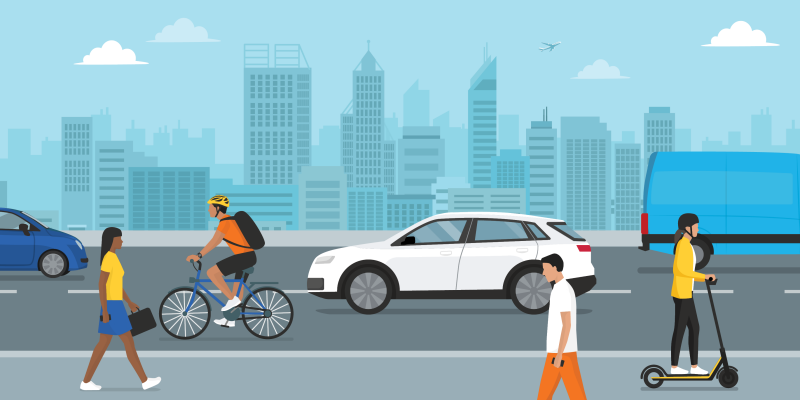
Adolescent road safety is a significant health and wellbeing issue that I believe requires greater attention, particularly as young people transition towards independent driving. Obtaining a driver's licence represents freedom and responsibility, yet this independence introduces risks with potentially devastating consequences. The Australian Institute of Health and Welfare (AIHW, 2021) reported that 225 Australians aged 15–24 died from on-road motor vehicle injuries in 2019. Similarly, the World Health Organization (WHO, 2023) identifies road traffic injuries as a leading cause of death among people aged 5–29 worldwide. These findings reinforce my belief that road safety must remain a priority within adolescent health education. However, effective prevention requires more than teaching road rules or highlighting the consequences of dangerous driving.
One concern is the relationship between driving inexperience and developing cognitive skills. McKnight and McKnight (2003) identified attention and hazard-recognition failures as contributing factors in crashes involving young novice drivers. Similarly, Deery (1999) highlighted the importance of hazard perception and risk assessment in understanding young driver behaviour. These findings challenge the assumption that obtaining a licence necessarily indicates sufficient preparation for independent driving. While young people may demonstrate the technical ability to operate a vehicle, recognising developing hazards and responding appropriately requires experience. I therefore believe road safety education must distinguish between knowing how to drive and developing the judgement necessary to drive safely.
Recognising hazards is an important part of safe driving. Consider how quickly a situation can change and how an inexperienced driver might respond differently from someone with more experience.
(Transport for NSW, n.d.)
Social influences further complicate this issue. Simons-Morton et al. (2005) found that teenage passengers could influence risky driving behaviours, demonstrating how social circumstances affect decision-making. This is particularly concerning because adolescents may experience pressure to demonstrate confidence or gain approval from friends. The NSW Government (n.d.) also recognises that passenger behaviour can distract drivers and increase crash risks. Reflecting on this evidence, I recognise that unsafe driving cannot always be explained by inadequate knowledge. A young person may understand the dangers of speeding yet still make unsafe decisions when surrounded by peers. Consequently, I believe schools should provide opportunities to practise resisting social pressure rather than relying exclusively on warnings about dangerous behaviour.
Another important consideration is the interaction between individual behaviour and environmental conditions. Speeding, fatigue and distraction can increase driving risks, while poor visibility and road conditions introduce additional hazards. The Australian Transport Council (2011) emphasised that road safety requires coordinated action involving safer roads, vehicles, speeds and road users. This challenges approaches that place responsibility entirely on young drivers. Although personal accountability remains essential, protective licensing restrictions and safer road environments also contribute to injury prevention. I believe recognising these broader influences provides a more realistic understanding of adolescent road safety.
My first recommendation is to strengthen practical road safety education within secondary schools. PDHPE lessons could incorporate hazard-perception scenarios, interactive decision-making activities and discussions about passenger behaviour. Students could analyse realistic situations involving distraction or speeding before explaining how they would respond. However, Roberts and Kwan (2001) found no evidence that traditional school-based driver education reduced crash involvement, with some programs encouraging earlier licensing. This has challenged my initial belief that increasing road safety education would automatically improve outcomes. Consequently, I would prioritise activities that develop risk awareness and responsible decision-making rather than accelerate students towards obtaining their licences.
My second recommendation is to strengthen collaboration between schools, families and road safety organisations. Parents and caregivers could receive guidance about modelling safe driving behaviours and supporting supervised practice. Schools could also invite road safety educators to facilitate workshops addressing peer influence and responsible passenger behaviour. Graduated driver licensing provides another important protective measure. Russell et al. (2022) found that these systems were associated with reduced crash rates among young drivers, reinforcing the importance of combining education with restrictions that gradually introduce higher-risk driving situations.
Implementation would require schools to integrate road safety activities into existing PDHPE programs and establish partnerships with community organisations. Teachers could use anonymous student surveys to identify misconceptions and evaluate changes in attitudes following educational activities. Importantly, programs should avoid relying solely on graphic crash imagery, which may distress students without necessarily improving practical decision-making. Instead, I would prioritise realistic scenarios that encourage students to recognise risks and rehearse safer responses.
Reference List
Australian Institute of Health and Welfare. (2021). Australia's youth: Unintentional injuries. https://www.aihw.gov.au/reports/children-youth/unintential-injuries
Australian Transport Council. (2011). National road safety strategy 2011–2020. Australian Government.
Deery, H. A. (1999). Hazard and risk perception among young novice drivers. Journal of Safety Research, 30(4), 225–236. https://doi.org/10.1016/S0022-4375(99)00018-3
McKnight, A. J., & McKnight, A. S. (2003). Young novice drivers: Careless or clueless? Accident Analysis & Prevention, 35(6), 921–925. https://doi.org/10.1016/S0001-4575(02)00100-8
NSW Government. (n.d.). Driving distractions. https://www.nsw.gov.au/driving-boating-and-transport/driving-nsw/roads-safety-and-rules/warnings-and-hazards/driving-distractions
Roberts, I. G., & Kwan, I. (2001). School-based driver education for the prevention of traffic crashes. Cochrane Database of Systematic Reviews, (3), Article CD003201. https://doi.org/10.1002/14651858.CD003201
Russell, K. F., Vandermeer, B., & Hartling, L. (2022). Graduated driver licensing for reducing motor vehicle crashes among young drivers. Cochrane Database of Systematic Reviews, (3), Article CD003300. https://doi.org/10.1002/14651858.CD003300.pub3
Simons-Morton, B. G., Lerner, N., & Singer, J. (2005). The observed effects of teenage passengers on the risky driving behavior of teenage drivers. Accident Analysis & Prevention, 37(6), 973–982. https://doi.org/10.1016/j.aap.2005.04.014
Transport for NSW. (n.d.). Young driver safety [Video]. YouTube. https://www.youtube.com/watch?v=R1NCm_lbTHM
World Health Organization. (2023). Global status report on road safety 2023. https://www.who.int/publications/i/item/9789240086517